

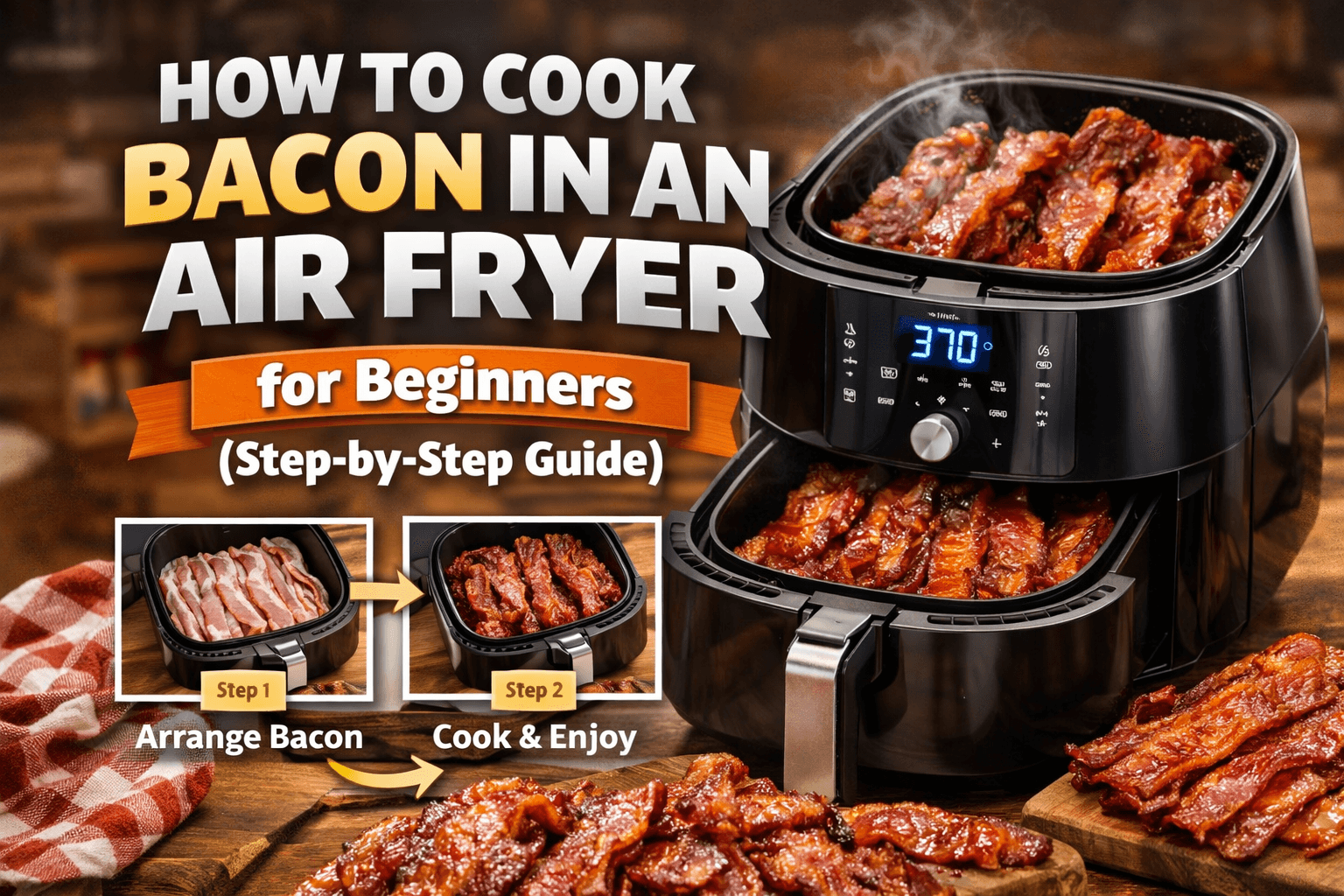
Craving that crispy, smoky bacon without the greasy mess of a frying pan? We’ve all been there, standing over a splattering stovetop, trying to achieve bacon perfection. But what if there was a simpler, cleaner, and frankly, more effective way?
That’s where the magic of the air fryer comes in. This post will show you exactly how to cook bacon in air fryer, transforming your breakfast routine and ensuring consistently delicious results every single time. You’ll learn the best temperatures, cooking times, and even how to handle different thicknesses of bacon for optimal crispiness.
Get ready to say goodbye to burnt edges and uneven cooking!
Key Takeaways
- Learn the ideal temperature and time for air frying bacon.
- Discover how to avoid smoke and excessive grease in your kitchen.
- Understand how to cook different thicknesses of bacon for perfect results.
- Get tips for easy cleanup after cooking bacon in your air fryer.
- Explore variations and additions to make your air fryer bacon even better.
- Find out how to reheat air fryer bacon for that fresh crispness.
The Ultimate Guide to Air Fryer Bacon
Cooking bacon in an air fryer is a revelation for anyone who loves this breakfast staple. It’s a method that significantly cuts down on cooking time and, more importantly, drastically reduces the amount of grease that splatters around your kitchen. This section will walk you through the fundamental steps, setting the stage for perfectly cooked bacon every time.
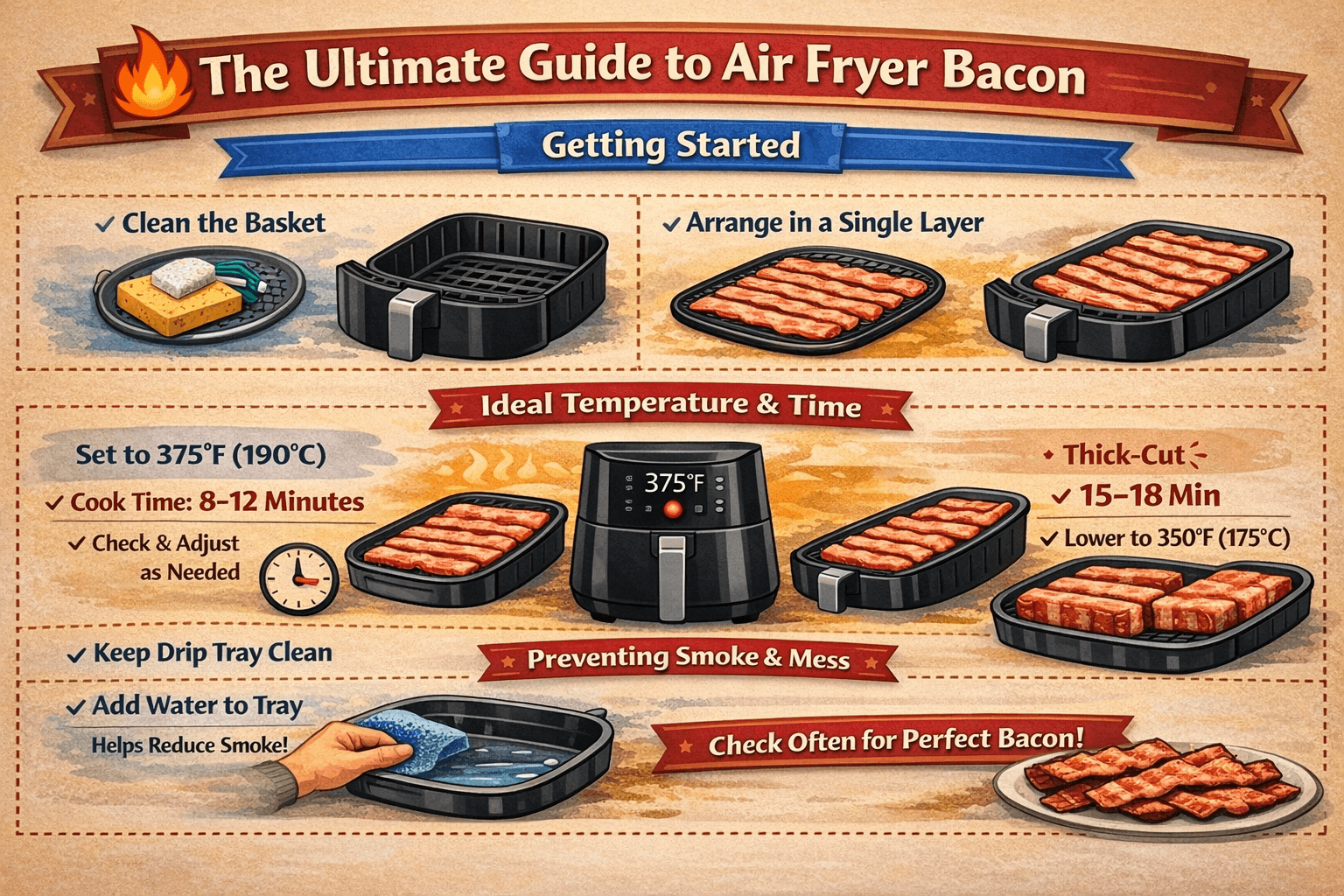
We will cover the basic setup, the ideal temperature, and approximate cooking times, giving you a solid foundation for success.
🔥 See the Top 5 Best Air Fryers for Bacon
Getting Started With Your Air Fryer Bacon
Before you even think about placing bacon in your air fryer, a little preparation goes a long way. Ensure your air fryer basket is clean of any previous cooking residue. A clean basket helps prevent burnt bits from sticking and affecting the taste and aroma of your bacon.
For most standard air fryers, you don’t need to preheat them, but some users find a brief preheat of 3-5 minutes at the target temperature can lead to more even cooking.
The most crucial element for successful air fryer bacon is arranging the strips in a single layer. Overcrowding the basket will prevent the hot air from circulating properly around each strip, leading to uneven cooking, where some pieces are crispy, and others remain flabby. If you’re cooking a large batch, it’s far better to do it in multiple rounds than to try and cram it all in at once.
This also allows you to monitor each batch more closely.
Ideal Temperature and Time
Finding the sweet spot for temperature and time is key to how to cook bacon in air fryer. For most regular-cut bacon, a temperature of 375°F (190°C) is generally recommended. This temperature is hot enough to render the fat and crisp up the meat without burning it too quickly.
The cooking time will vary depending on the thickness of your bacon and how crispy you prefer it, but it typically ranges from 8 to 12 minutes.
It’s always a good idea to check your bacon a few minutes before the estimated end time. You can do this by carefully pulling out the basket and visually inspecting the bacon. If it looks like it’s getting too dark too fast, you can reduce the temperature slightly or remove it a bit earlier.
Similarly, if it’s not as crispy as you’d like, you can give it another minute or two. Some air fryer models might run hotter or cooler than others, so the first time you try this, it’s an excellent idea to keep a closer eye on it.
Handling Different Bacon Thicknesses
Bacon comes in various thicknesses, from thin-cut to extra-thick cut, and this significantly impacts cooking time. Understanding these differences is vital for mastering how to cook bacon in air fryer. Thin-cut bacon cooks the fastest and is more prone to burning.
It might only need 6-8 minutes at 375°F (190°C). Keep a close watch to prevent it from becoming brittle.
Regular or standard-cut bacon usually falls into that 8-12 minute range mentioned earlier. This is the most common type found in supermarkets and is what most recipes refer to. For extra-thick or gourmet-cut bacon, you’ll need to extend the cooking time, potentially up to 15-18 minutes, and you might even consider lowering the temperature slightly to 350°F (175°C) to allow the thicker cut to render its fat more thoroughly without the exterior overcooking.
This slower rendering process is essential for achieving a tender, flavorful result in thicker cuts.
Preventing Smoke and Mess
One of the most significant advantages of using an air fryer for bacon is the reduction of smoke. Traditional pan-frying often fills your kitchen with smoke because the bacon fat drips directly onto a hot pan, vaporizing quickly. In an air fryer, the fat drips down into the collection tray below the basket.
This containment system significantly minimizes the amount of smoke that escapes into your kitchen.
To further minimize smoke, ensure your air fryer is clean. Any residual grease or food particles can burn and produce smoke. Additionally, if you notice a bit of smoke, it’s usually a sign that the fat is rendering and dripping.
Some people choose to add a little water to the drip tray beneath the basket. This water can help catch some of the fat drippings and prevent them from smoking when they hit the hot surface, acting like a small steam bath at the bottom of your appliance.
Perfecting Your Air Fryer Bacon Technique
Now that you have the basics of how to cook bacon in air fryer down, let’s explore some techniques to elevate your bacon game. This includes how to achieve that ultimate crispiness, manage grease effectively, and even add extra flavor. These refinements will ensure every strip of bacon you cook is a culinary delight.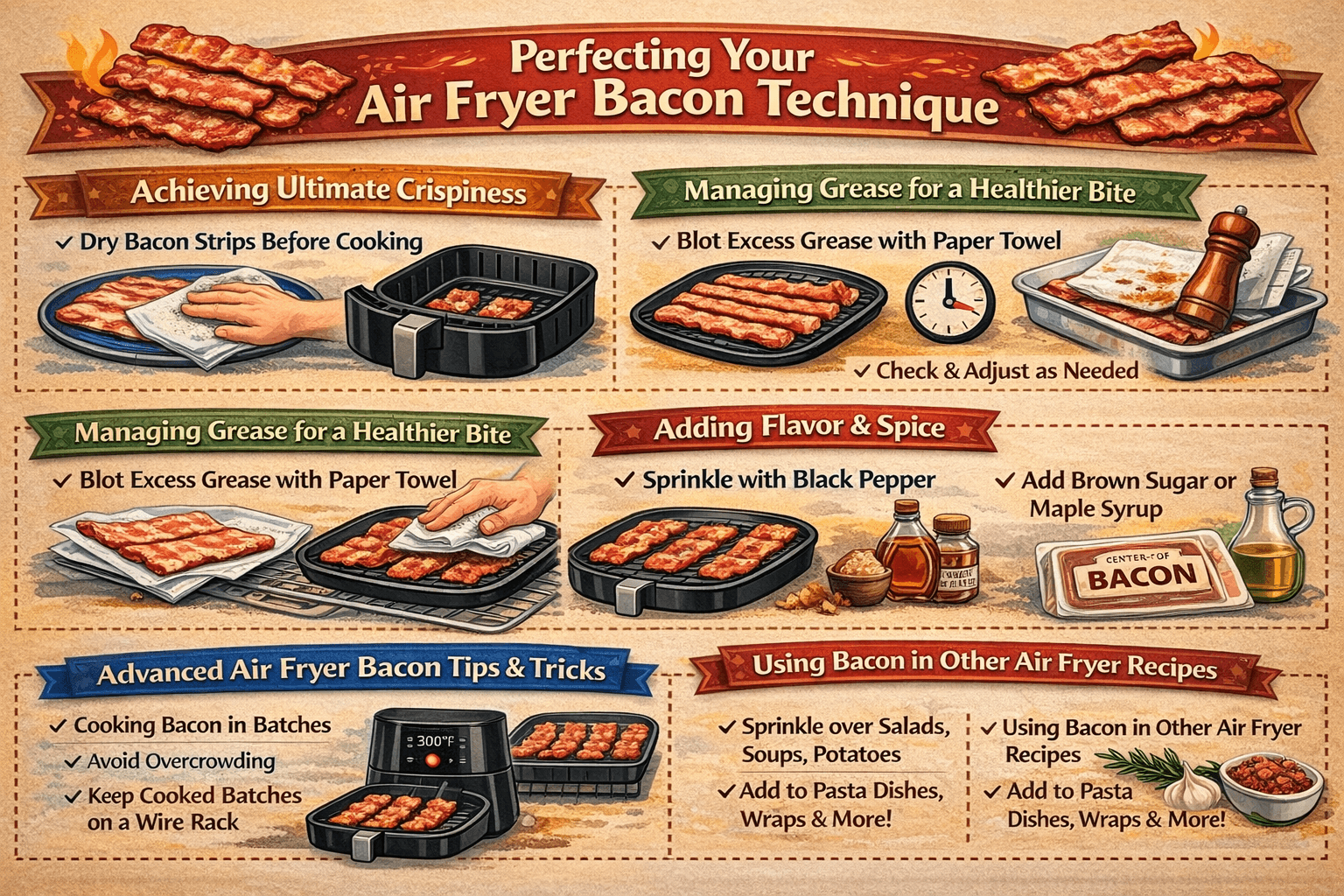
Achieving Ultimate Crispiness
Crispiness is often the holy grail of bacon perfection. To achieve it, several factors come into play. Firstly, ensure your bacon strips are fully dry before placing them in the air fryer.
Pat them with paper towels to remove excess moisture, as moisture can lead to steaming rather than crisping. Arrange the strips in a single layer, with a small amount of space between each piece. This space allows the hot air to circulate freely, drying out the bacon and making it wonderfully crisp.
Don’t be afraid to check your bacon a few minutes before the expected cooking time is up. Bacon can go from perfectly crisp to burnt in a matter of seconds. If you find that the edges are crisping up nicely but the center still has some chewiness you don’t prefer, you can flip the bacon strips halfway through the cooking process.
This flipping, combined with the efficient hot air circulation, ensures even crisping across the entire strip. For an extra crispy finish, some people prefer to cook their bacon slightly longer at a slightly lower temperature after the initial rendering phase.
Managing Grease for a Healthier Bite
While bacon is undeniably delicious, it’s also known for its fat content. The air fryer helps manage this grease effectively. As mentioned, the fat drips away from the bacon and collects in the bottom tray.
After cooking, carefully remove the basket and pour out the rendered fat. You can discard this fat or even save it for other cooking applications, like frying eggs or potatoes, as it adds a fantastic flavor.
If you’re concerned about excessive grease, consider blotting the bacon with paper towels immediately after removing it from the air fryer. This removes any surface grease that didn’t drip away during cooking. Another tip is to use less fatty cuts of bacon or choose center-cut bacon, which typically has less fat compared to end pieces.
Some air fryer models also have specific drip trays designed to catch grease more efficiently, so check your appliance’s features.
Adding Flavor and Spice
Cooking bacon in an air fryer isn’t just about convenience; it’s also an opportunity to experiment with flavors. Before cooking, you can lightly season your bacon strips with various spices. Black pepper is a classic choice that adds a subtle kick.
For a touch of sweetness, sprinkle a small amount of brown sugar or maple syrup over the strips. Be mindful that sugar can caramelize and burn quickly, so keep an eye on it.
For a bit of heat, try a sprinkle of smoked paprika, chili powder, or even a touch of cayenne pepper. A light dusting of garlic powder or onion powder can also add a savory depth. When adding wet glazes like maple syrup or barbecue sauce, it’s often best to apply them towards the end of the cooking time to prevent them from burning.
Experiment with different herb rubs, such as rosemary or thyme, for a more sophisticated flavor profile.
Advanced Air Fryer Bacon Tips and Tricks
Once you’re comfortable with the basic process of how to cook bacon in air fryer, you can start exploring more advanced techniques. These tips will help you tackle specific challenges and unlock even greater potential from your air fryer and your bacon.
Cooking Bacon in Batches
For larger families or when you need a significant amount of bacon, cooking in batches is essential. As emphasized earlier, never overcrowd the air fryer basket. Overcrowding leads to steaming, resulting in limp, greasy bacon instead of crispy perfection.
A general rule of thumb is to ensure there’s at least half an inch of space between each bacon strip. This allows the hot air to circulate effectively around every piece.
If your air fryer basket is smaller, you might only fit 3-5 strips at a time. This means cooking might take a little longer overall, but the quality of the final product will be superior. To manage this efficiently, you can place the cooked batches on a wire rack set over a baking sheet.
This allows the bacon to stay crispy and prevents the cooked pieces from steaming in their own rendered fat.
Reheating Air Fryer Bacon
Leftover bacon can be just as enjoyable as freshly cooked bacon, especially if reheated properly. The air fryer is an excellent tool for this. Reheating bacon in an air fryer helps to restore its crispness, making it taste almost as good as when it was first cooked.
To reheat bacon, place the cold, cooked strips in the air fryer basket in a single layer. Use a lower temperature than you would for cooking, around 300°F (150°C). This prevents the bacon from burning while still warming it through and crisping it up.
The reheating time is typically much shorter, usually just 2-4 minutes, so keep a close eye on it. You want to warm it until it’s heated through and regain its desired crispiness without overcooking it.
Using Bacon in Other Air Fryer Recipes
The delicious results of air fryer bacon extend beyond just breakfast. You can use your perfectly cooked bacon in countless other dishes. Chop up some crispy air fryer bacon and add it to salads for a delightful crunch and savory flavor.
It’s also a fantastic topping for baked potatoes, soups, or even as a crunchy element in sandwiches and wraps.
Consider incorporating chopped air fryer bacon into your favorite pasta dishes or mac and cheese. Its smoky, salty flavor pairs wonderfully with creamy or cheesy bases. You can even use it to wrap around other foods, like asparagus or chicken breasts, before air frying them for an extra layer of flavor and texture.
The possibilities are truly endless once you’ve mastered how to cook bacon in air fryer.
Troubleshooting Common Issues
Even with the best methods, you might occasionally encounter a problem. If your bacon is coming out unevenly cooked, the most likely culprit is overcrowding the basket. Ensure there’s adequate space for air circulation.
If your bacon seems to be burning too quickly on the edges, try reducing the temperature slightly or shortening the cooking time.
✅ Air Fryers That Cook Bacon Crispy & Even
If you notice excessive smoke, double-check that your air fryer is clean, especially the basket and the drip tray. Sometimes, if the bacon is particularly fatty, the sheer volume of rendered fat can cause a bit of smoke, even in a clean appliance. Adding a little water to the drip tray can help mitigate this.
If your bacon isn’t crispy enough, it might need a little more time or a slightly higher temperature for the last minute or two of cooking. Always remember to check frequently.
Comparing Air Fryer Bacon to Other Methods
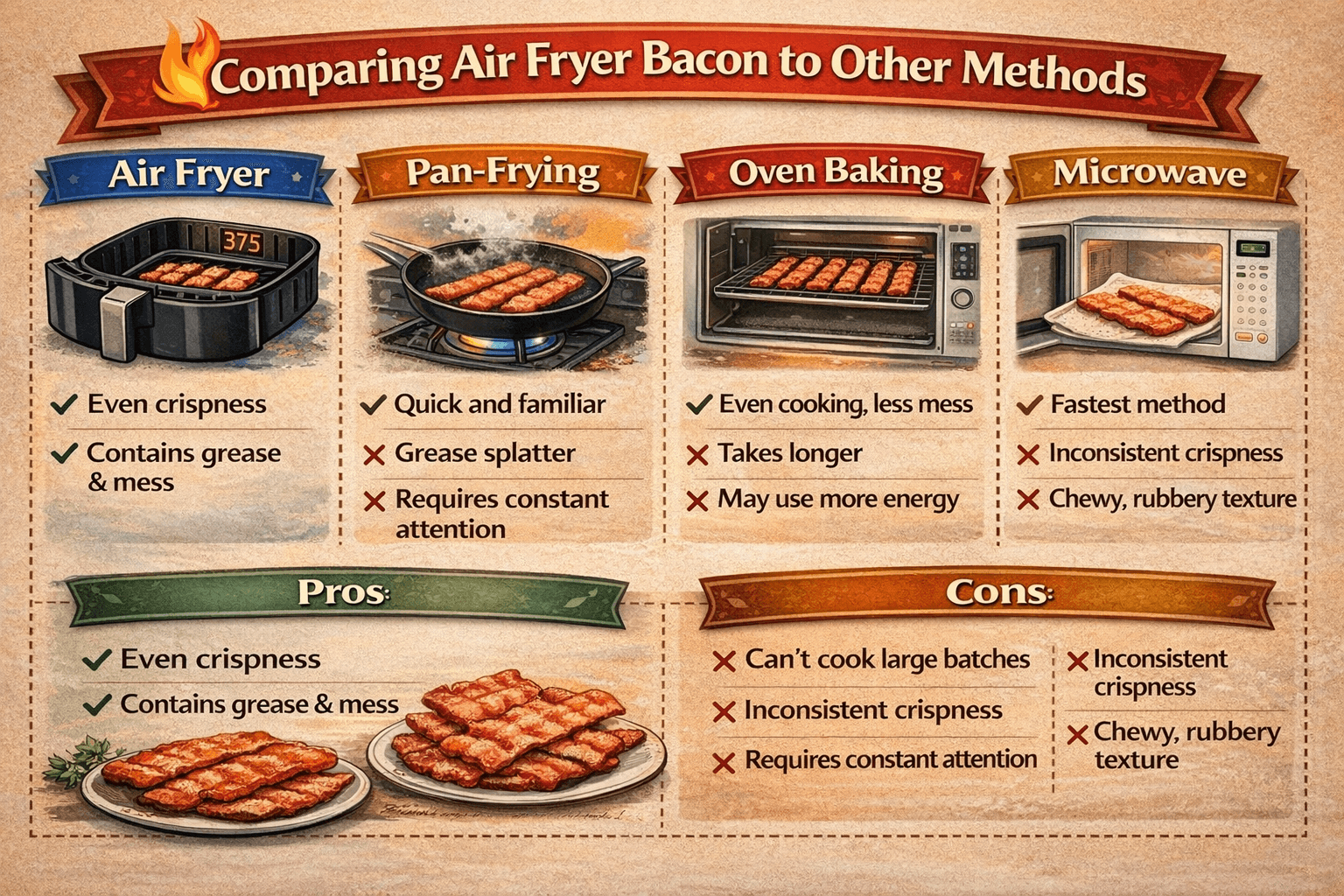
To truly appreciate how to cook bacon in air fryer, it’s helpful to compare it to traditional methods. Each method has its pros and cons, but the air fryer often emerges as a superior choice for many home cooks.
Air Fryer vs. Pan-Frying
Pan-frying bacon is a classic for a reason; it’s familiar and can produce delicious results. However, it comes with significant drawbacks. The most prominent is the splattering grease, which can create a messy stovetop and kitchen.
It also requires constant attention to prevent burning and flipping. The grease buildup in the pan can also lead to uneven cooking if not managed.
The air fryer, on the other hand, contains the mess. The hot air circulation is more even than the direct heat of a pan, often leading to more consistent crispiness across all strips. The cooking process is also largely hands-off once the bacon is in the basket.
While pan-frying might feel more traditional, the ease and cleanliness of air frying often make it the preferred method for many.
Air Fryer vs. Oven Baking
Oven-baking bacon, usually on a rack over a baking sheet, is another popular method. It offers a good level of even cooking and less mess than pan-frying. Like the air fryer, it allows hot air to circulate around the bacon.
However, oven baking typically takes longer, often 15-20 minutes, whereas air frying can achieve similar results in half the time.
The air fryer’s more concentrated and intense hot air circulation tends to produce crispier bacon more quickly. The compact nature of the air fryer also means it preheats faster and uses less energy for smaller batches compared to a full-sized oven. For speed and optimal crispness, the air fryer often has the edge.
Air Fryer vs. Microwave
Microwaving bacon is the fastest method, but it often results in a texture that is less desirable for many. While it can cook bacon quickly, the crispness can be inconsistent, and the texture can sometimes be described as chewy or rubbery rather than satisfyingly crisp. The microwave uses a different heating mechanism that doesn’t promote the same kind of fat rendering and crisping as hot air circulation.
The air fryer excels where the microwave falls short in terms of texture. The dry, circulating heat of the air fryer breaks down the fat and crisps the meat in a way that microwaving simply cannot replicate. For those who prioritize crispy bacon, the air fryer is a far superior choice to the microwave.
Frequently Asked Questions
Question: What is the best temperature for cooking bacon in an air fryer?
Answer: The generally recommended temperature for cooking bacon in an air fryer is 375°F (190°C). This temperature is effective for rendering the fat and achieving crispiness without burning the bacon too quickly.
Question: How long does it take to cook bacon in an air fryer?
Answer: Cooking time for bacon in an air fryer typically ranges from 8 to 12 minutes for regular-cut bacon. This time can vary depending on the thickness of the bacon and your desired level of crispiness.
Question: Do I need to preheat my air fryer for bacon?
Answer: Preheating is often optional for bacon. Many people find success by placing bacon in a cold air fryer and letting it cook. However, a brief 3-5 minute preheat at the cooking temperature can sometimes lead to more even cooking.
Question: Can I cook bacon in a single layer in my air fryer?
Answer: Yes, cooking bacon in a single layer is crucial for even cooking and crispiness. Overcrowding the air fryer basket will prevent hot air circulation, resulting in unevenly cooked bacon.
Question: How do I clean my air fryer after cooking bacon?
Answer: After the air fryer has cooled, remove the basket and drip tray. Wash them with warm, soapy water and a non-abrasive sponge. Wipe down the interior and exterior of the air fryer with a damp cloth.
Ensure all parts are completely dry before reassembling.
Final Thoughts
Mastering how to cook bacon in air fryer opens up a world of convenience and deliciousness for breakfast and beyond. The ability to achieve perfectly crispy bacon with minimal mess is a true kitchen win. Remember the key is a single layer of bacon in the basket, the right temperature around 375°F, and keeping an eye on it during the 8-12 minute cooking window.
Adjusting for thickness is also important; thinner cuts cook faster, while thicker ones might need a bit more time or a slightly lower heat. The air fryer’s design inherently helps manage grease, leading to a cleaner kitchen and a less fatty final product. Don’t hesitate to experiment with adding a sprinkle of pepper, a touch of brown sugar, or even some paprika before cooking to create unique flavor profiles.
Reheating leftover bacon in the air fryer is surprisingly effective, bringing back that desirable crispness. You can confidently use your air-fried bacon in salads, on baked potatoes, or crumbled into pasta dishes, adding a smoky, savory dimension. Embrace the simplicity and efficiency this method offers, and enjoy consistently fantastic bacon every time.
Recent Posts
Upgrade your kitchen now! See our 5 best microwaves drawer reviews. Make an informed purchase and save time and space.
Score the best microwaves under 50 dollars! Our 5 top product reviews help you save money and eat well. Get yours now!.